Monday, March 21, 2016

Avoiding Disaster


Trading isn't about targeting gigantic wins as much as it's about avoiding catastrophic losses.

My job is in disaster avoidance--I’m a manager of risk. The good times(trending markets) will come, they always do, they always will. The trick is in surviving the instances when the markets can crush you.

Ultimately, trends are what bring in the outsized wins. And you cannot participate in the trend if you can’t afford to place the bet. So my line of logic stands: cut losing trades off at the point of the predetermined exit/trailing stop so you have the chance to capitalize on future trends. In short--don't let losers become huge losers.

When you allow price to do the talking, you can ignore your inner biased narrative and shun a fundamental belief about an asset/instrument. “It has to go up in the future” is not a strategy, it's a recipe for disaster.

I entered into 2 Valient Pharmaceutical trades over the past year. I got hurt for sure, but I could have gotten killed without my system.

What could have killed me?
If instead of selling on the way down, I could have bought on the way down to average my dollar cost. This would have DECIMATED my portfolio. I ended up taking a few small losses on my VRX trades. If I allowed my losers slip further or bought on the way down, I could have easily had a double digit % drop in my entire portfolio.

What saved me from getting killed?
I Determined hard exits before I entered into the trades, which in turn lead to appropriate position sizing based on my risk parameters. I never know if I will win or lose when I enter a trade. But if I do lose, I always know how much.

Chart 1: My initial entry
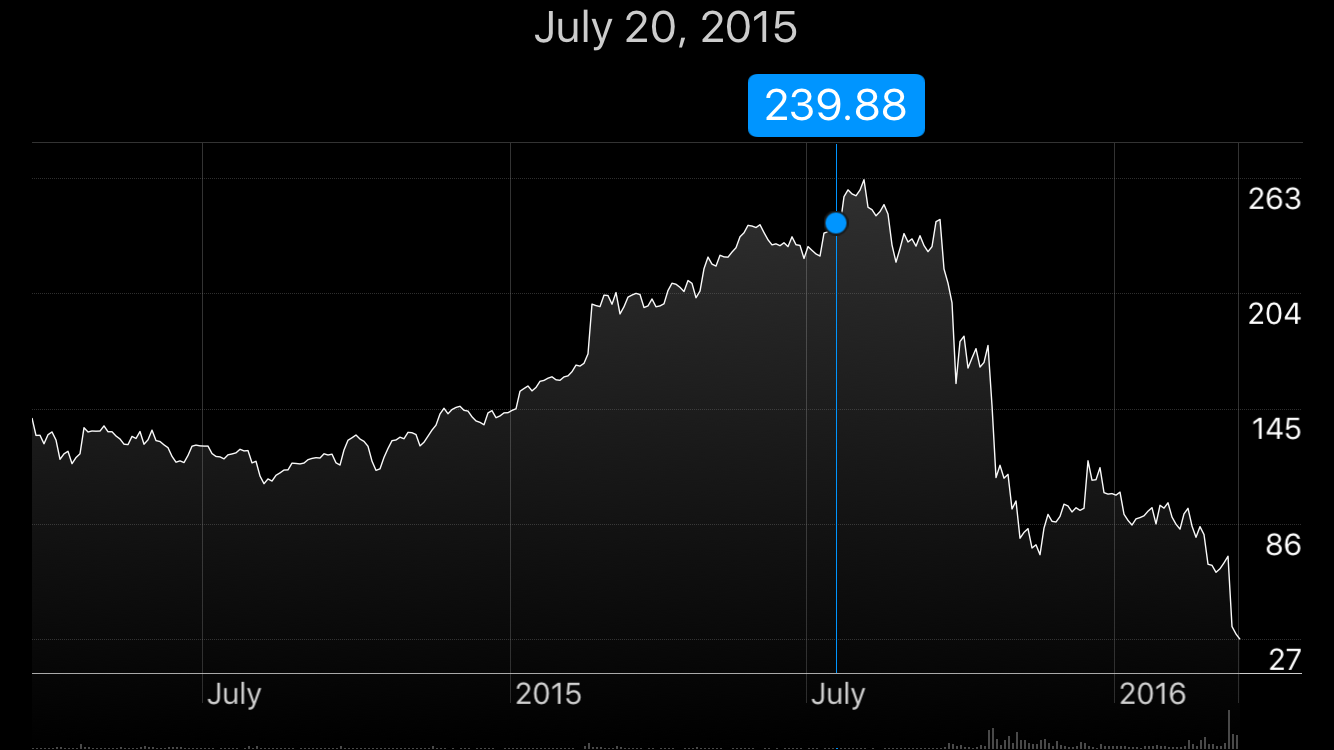
Chart 2: My exit point
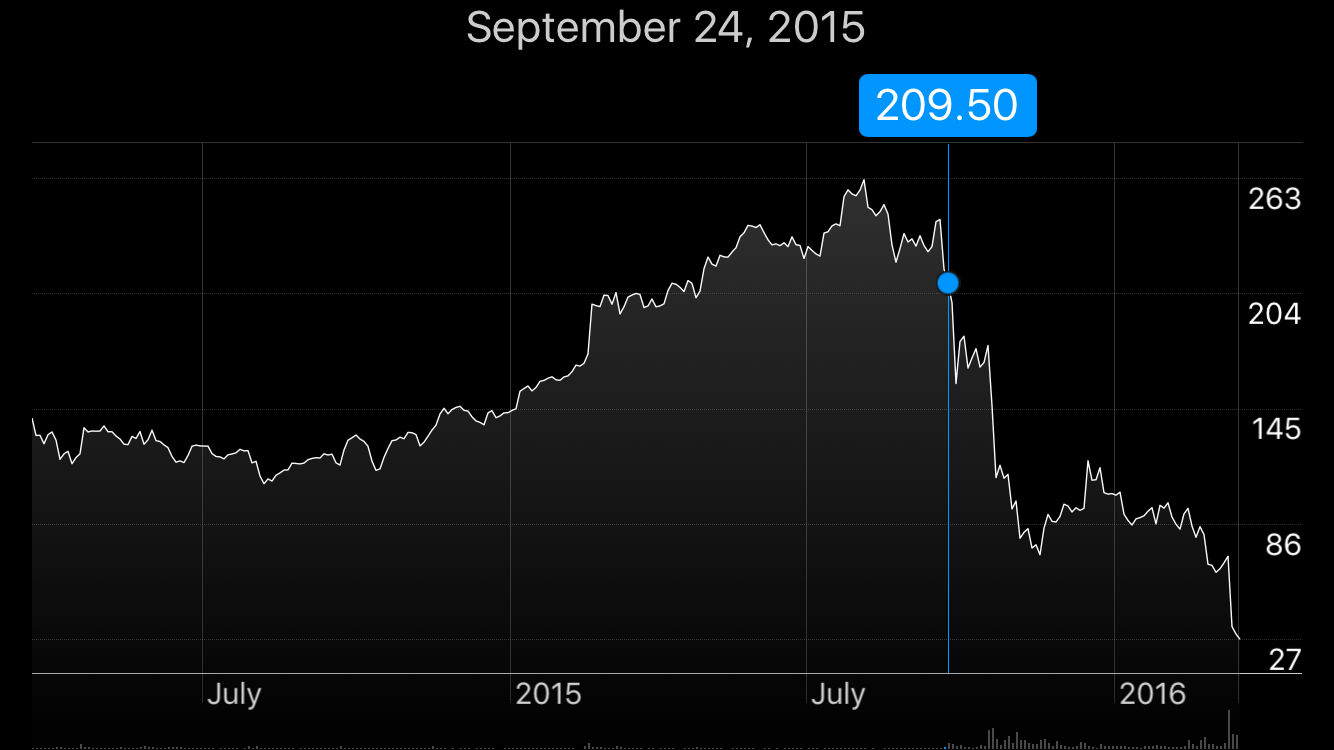
Chart 3: My second shot at Valeant. I entered into another small position here.

Chart 4: My partial exit. I sold 2/3rds of my shares here.

Chart 5: My complete exit from the trade.

Chart 6: Current price. No position held.
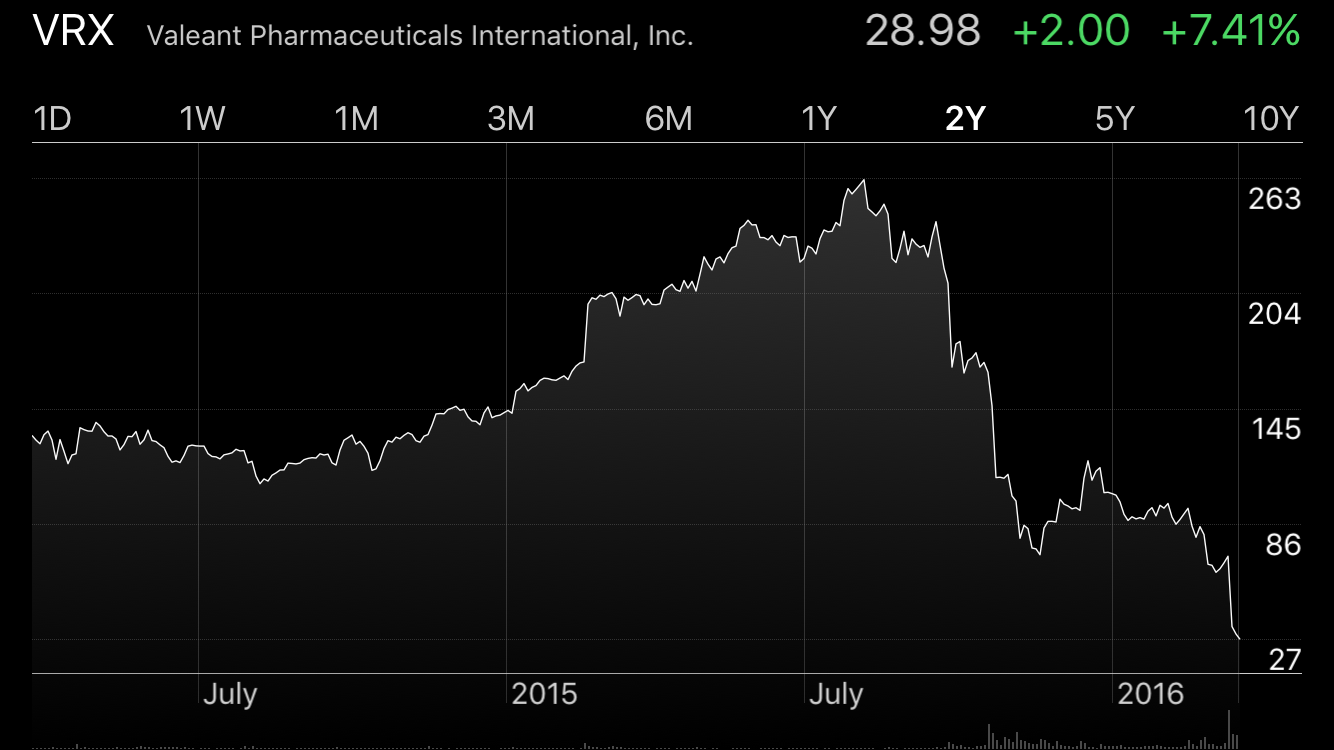

“The public ought to grasp firmly this one point: that the real reason for a protracted decline is never bear raiding. When a stock keeps on going down, you can bet that there is something wrong with it, either with the market for it or with the company.”


All this being said, something is rotten in the biotech sector. The prices are giving the hints. With volatility getting super low again, I’ve purchased inexpensive Put contracts on big name biotechs as a portfolio hedge/alpha generator in the upcoming months. Once volatility gets high again, premiums will get fluffy, and it will get expensive to bet on a drop in biotech.

Monday, March 14, 2016

Worst Case Scenario


Calculating the “worst case scenario” answers: “What would happen if every position I currently hold goes against me and triggers an exit?”

I used to trade without knowing my WCS, but it's like walking through a messy room with the lights turned off.  

The question I came to was, “how could I run a profitable trading system without quantifying my total portfolio risk? If the shit hits the fan, where will I stand?”

The necessary prerequisite to calculating the WCS is establishing a hard exit before you enter a trade and using a trailing stop on winning positions. While I know many investors don’t have hard exits in positions, it is in my opinion that reading this article will do you little good without having that foundational knowledge.

If you do want to build the necessary knowledge on how position sizing, timeframe, initial exits, and trailing stops interact with each other, all of this info is archived here.

Trading may seem confusing and overwhelming, but good trading needs to be treated like any other business if it's going to be successful. Given enough time and effort, the murkiness becomes crystal clear.   

Essentially, the “worst case scenario” is losing all of the Total Open Risk in your account. Once Total Open Risk is calculated, you can determine how bad the worst case scenario could be.

1: Before finding Total Open Risk, you must determine Individual Position Open Risk.

2: The Excel cell formula for Individual Position Open Risk is “=(Price of Asset - Exit price) x number of shares.

3: After finding each Individual Position Open Risk, you can then find the Total Open Risk, which is just the net sum of every Individual Position Open Risk.

4: In Excel, the cell formula for Total Open Risk is “=SUM(column containing Individual Open Risks)”

*To remember: open risk is always changing because asset prices and exit prices are always changing. If you set up an Excel(or GoogleSheets) spreadsheet the right way, as you update asset prices and exit prices, the Individual Position Open Risk and the Total Open Risk will automatically adjust to the changes.

Below is a small sample of some trades I’m in. Hopefully the visual adds clarity.

As you can see, I have my assets listed in column A, current price in B, current stop price in C, # of shares in D, and Individual Position Open Risk in E.

So for ARTNA shares, I’ll go into Cell E4 and type, “=(B4-C4)*D4” and hit enter. GoogleSheets does the calculations for me. As long as I have columns B, C, and D filled out, I can just drag the bottom right corner of Cell E4 and it will do all the calculations for all of my assets.

In a separate Cell to the right, I will write the formula for Total Open Risk, which is “SUM(E4:E8)” for this sample.

Now that you can determine Total Open Risk, you can know how bad the worst can be. Right now in this account, my maximum estimated WCS downdraw is 10.5%. I’m comfortable with that number, but if it was at 60%, I may want to sell off some assets to pare back my risk.   

It took me about 8 months to get to this point in my trading system, so do not feel discouraged if it all seems like a different language.

Monday, March 7, 2016

The Best Trade Idea of the Decade


*You can give a man a fish……..  


OR...


You can tell him which waters are best for fishing.  
You can offer a fishing rod.
Advise on which baits work well.
You can even suggest a recipe for cooking the fish.  


*You can give a man a stock/trade idea……..


OR...


You get the point; it's better to teach someone a process than to provide a tip.


I recently read an incredibly well thought-out article by NYC Hedge Fund manager Brian Shapiro. It would a disservice on my part to not share his article.


Titled, “It's Time,” is about the next big investment of the decade--gold. Its profound, informative, and an overall elegant argument for why gold could be a great trade over the next ten years.    


But beware of trading on other people’s beliefs. While using other people’s trading ideas, one may neglect to recognize that there is an entire system behind a trade.


A trade idea is worthless without the system to support it.


Questions to ask yourself:
Can I assume gold will rise over the next ten years?
Do I just “buy-and-hold,” and hope for the best?
How big of a position do I take?
When do I sell?
Do I buy physical gold, gold futures, an ETF, a gold mining company, etc.?


If you cannot specifically answer these questions, it will do you more harm than good to participate in markets.


In the long run, a reliable process will outperform unstructured individual trade ideas.  


Here's the water, a fishing rod, bait, and a recipe. All the answers are there if you’re willing to look and ask the right questions.

Here's the fish: an amazing nugget of knowledge, but worthless without a trading plan.

Monday, February 29, 2016

Mistake Free Trading


Traders should strive towards 100% mistake free trading.

What is considered a trading mistake?………...

Straying away from your written rules.

The biggest possible mistake is not having written rules to begin with.

*losing can be a success, winning can sometimes be a mistake.

Why write rues?………...

You do not trade the markets. You can only trade your beliefs about the markets.—Van K. Tharp

2 great links:


Great Seth Godin article from this Sunday

Monday, February 22, 2016

Price is King

I come from the mindset of “here and now.” The question I ask myself is, “what is the price doing at this very moment?” I never put my money on a prediction, I plainly react to price action.


Generalized philosophy: If price starts to have meaningful movement, I will bet on that movement and assume it will continue in that direction until it no longer does.  


If one could predict exactly how markets would move, it still wouldn't guarantee success. Without a specific strategy encompassing timeframe(s), entries, exits, position sizing and risk management, the chances of winning in markets are slim.       
 

  • The 2 most important things are position sizing and risk management.  
  • The very least important thing is the entry. Successful trading can exist with many different entry points.

Monday, February 15, 2016

273 Pages of Gold


“The successful trader has to fight these two deep-seated instincts. He has to reverse what you might call his natural impulses. Instead of hoping he must fear; instead of fearing he must hope. He must fear that his loss may develop into a much bigger loss, and hope that his profit may become a big profit. It is absolutely wrong to gamble in stocks the way the average man does.”


This quote is from Reminiscences of a Stock Operator; a gem of a book that is stuffed with profound trading lessons.


This book is a brilliant reminder that throughout time, markets don't change and neither do the people who trade in markets.   

For under $15, you can buy this on Amazon and learn the lessons that traders had to pay millions of dollars for in “market tuition.” 

The best investment is one in yourself.

Monday, February 8, 2016

Size Matters: Position Sizing Strategy


When trading in markets, “how much” you buy makes a big difference.

If you're going to buy shares of Facebook, how many shares do you buy? Do you buy an arbitrary 100 shares? Or as much as $5000 will get you?

Everyone wants to pick the big winner, but it's more important to focus on keeping losses contained to specific parameters.

In a quantified system, there is no room for “hope.” Nobody knows what the future looks like; FB shares could be trading at $1 next year.

Here is how I would trade FB in a $100,000 trading account:

FBs current price is $99.75
First, I would risk 1% net assets per trade, so $1000 risk per trade.  

Next, I would determine when I would sell FB. I like to use the bottom range of a 20-period Donchian Channel on a 5-year chart on Barchart.com, which is $85.72 (if you want to know this process in depth, I can walk you through it).

Then, I would find my initial position size by dividing my risk($1000) by the difference between the entry price and the exit price($99.75-$85.72=$14.03).
Position size=$1000/$14.03
=71.27
Position size=71 shares@$99.75/share equaling $7082. Although this one FB trade takes up 7.08% of equity, I’m only willing to lose 1% of equity.

Its not as if I’m buying $1000 of FB stock, or 10 shares, and leaving the trade alone. I know when I'm exiting the trade before I even enter, and I know how much I’m willing to lose per trade. Position sizing is just a function of how much I’m willing to let a stock move relative to how much I’m willing to allow my account to move.
The 20-period Donchian Channel used to determine the initial exit price also acts as a trailing stop-loss. As FB moves up far enough, so does the exit price--to ensure a profit.

*This is not an endorsement to buy FB.